Short-Run Tube Bending for OEMs: How to Maintain Quality at Low Volumes

Updated: Sep 24

Short-run tube bending orders and prototypes fail when they are built without production-level process control. OEMs reduce risk by working with suppliers who use CNC mandrel bending, documented setups, and inspection at every stage, regardless of quantity.
Why Short-Run Orders Create Risk
Low-volume orders introduce pressure to move quickly. When process discipline is reduced, repeatability suffers.
Common short-run issues include:
Undocumented setup adjustments
Tolerances loosened to achieve fit
Inconsistent bend geometry between parts
Limited in-process inspection
A prototype that fits once does not guarantee scalable production.
Why Prototypes Must Match Production Standards
A prototype should be built using the same equipment, tolerances, and inspection standards as long-term production.
At TEC, prototypes and short runs are produced using:
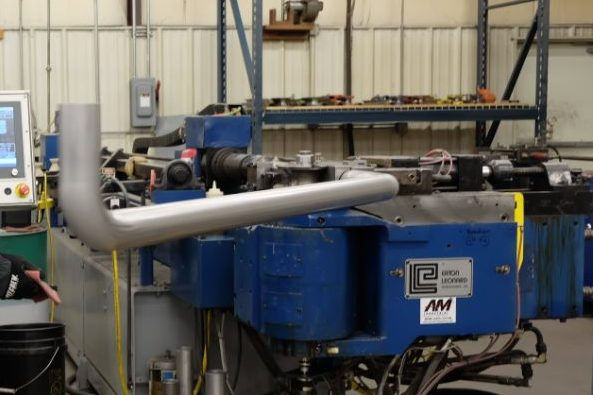
CNC mandrel bending
±1° angular tolerance
±1/16″ length tolerance
ISO 9001:2015 inspection procedures
This ensures what works at five parts works at fifty or five hundred.
Documentation Protects Repeatability
When setups are not documented:
Results vary between operators
Repeat orders behave differently
Small corrections compound over time
Documented processes preserve geometry and fit across runs.
Why Inspection Matters at Any Quantity
Short-run parts move quickly through fabrication. Inspection cannot be skipped.
TEC integrates inspection into:
Raw material verification
In-process monitoring
Final inspection prior to shipment
The same tube bending quality control applies regardless of volume.
How OEMs Reduce Short-Run Risk
OEMs reduce prototype and short-run risk by selecting suppliers who:
Use CNC-controlled bending
Maintain documented production tolerances
Apply ISO 9001:2015 quality procedures
Keep bending, fabrication, and inspection in-house
Low volume should not mean lower standards.
FAQs
Why do short-run tube orders fail?
They fail when suppliers reduce process control, skip documentation, or loosen tolerances for speed.
How can OEMs ensure prototype repeatability?
By requiring CNC mandrel bending, documented setups, and production-grade inspection from the first run.